
How to Make an iPhone Simpler and Easier to Use
Your iPhone does not have to feel overwhelming. A few simple changes can make it easier to use, quieter, and more comfortable for everyday tasks.
Many seniors use an iPhone every day, but still feel like it is doing too much.
Too many icons.
Too many notifications.
Too many settings that are easy to tap by accident.
The good news is that your iPhone can be simplified. You do not need a new phone, special apps, or technical skills. A few small changes can make your iPhone feel simpler, clearer, and much easier to use.
This article walks through simple ways to reduce clutter and make everyday use more comfortable.
Why iPhones Can Feel Overwhelming
iPhones are designed to do a lot. That is great when you need those features, but frustrating when you do not.
Common complaints we hear include:
Icons moving or disappearing
Notifications popping up constantly
Text feeling too small
Too many menus and options
None of this means you are using the phone wrong. It just means the phone has not been adjusted for how you actually use it.
Simple Ways to Make an iPhone Easier to Use
1. Reduce the Number of Icons on the Home Screen
You do not need every app visible.
Keeping only the apps you use most often makes the phone feel cleaner and easier to navigate. Extra apps can be moved to another screen or placed in a folder so they are out of the way but still available if needed.
Fewer icons means fewer accidental taps.
2. Increase Text Size and Button Clarity
Small text and thin fonts make everything harder to read.
Your iPhone allows you to:
Increase text size
Make text bolder
Improve contrast
These changes do not affect how the phone works, only how easy it is to see.
3. Turn Off Unnecessary Notifications
Constant alerts create stress and confusion.
Many apps send notifications even when they are not important. These can be turned off so your phone only alerts you for things that truly matter, like calls, messages, or reminders.
A quieter phone is easier to trust.
4. Use Assistive Features Designed for Seniors
Most people do not realize that iPhones include accessibility features designed to make the phone simpler and safer.
These features can:
Reduce complex gestures
Make buttons easier to tap
Limit confusing options
You can turn these on gradually and only use what feels helpful.
5. Keep Settings Simple and Familiar
You do not need to explore every menu.
Once your phone is set up in a way that works for you, it is okay to leave the rest alone. Familiar settings help build confidence and reduce the fear of doing something wrong.
You Do Not Have to Learn Everything at Once
The goal is not to master the iPhone.
The goal is to feel comfortable using it for the things you care about, staying in touch, getting important calls, and handling daily tasks without stress.
Small changes add up quickly.
Helpful Next Step
If scam calls are one of the things making your phone feel stressful, we have a free Quick Reference Guide to Scam Calls that explains:
What scam calls look like
What to ignore
What never to respond to
You can get your copy by clicking here.
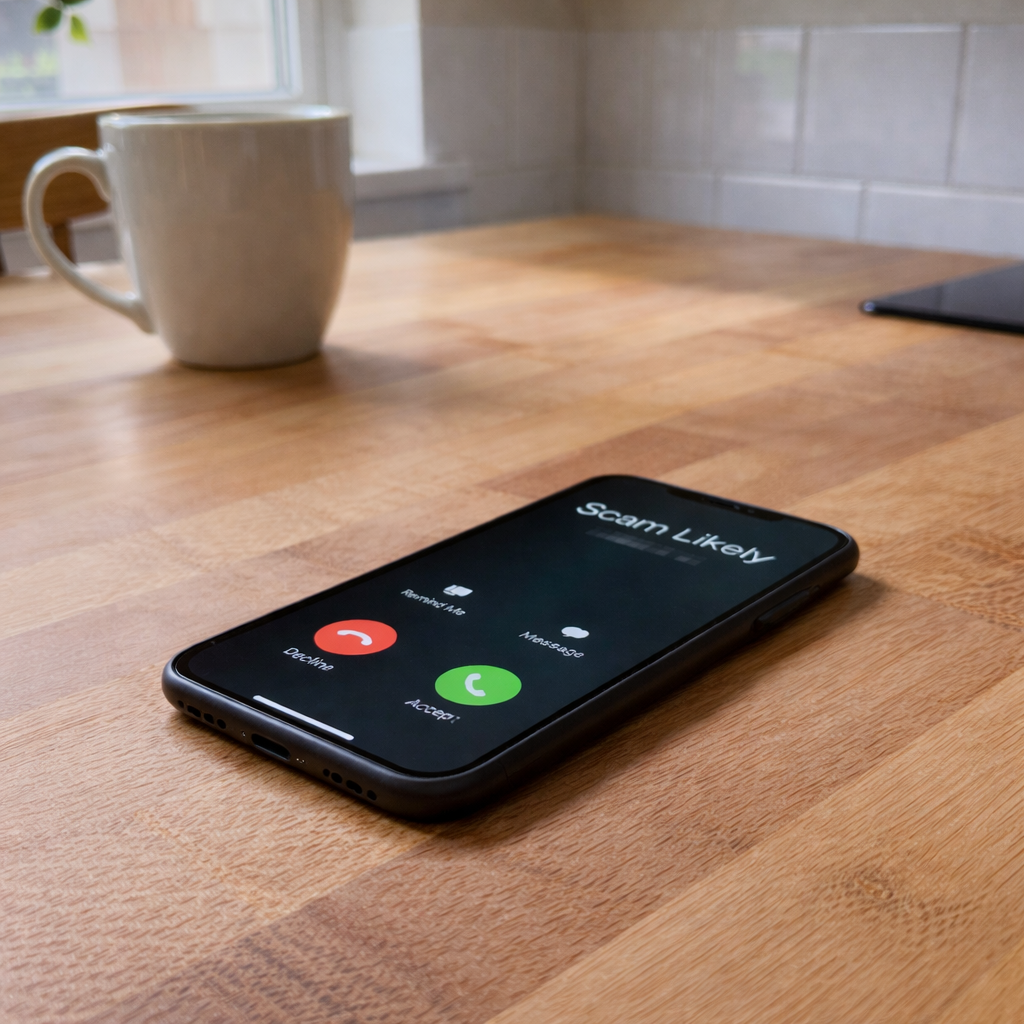
What “Scam Likely” Really Means on an iPhone (And What to Do When You See It)
Scam calls are designed to create fear and urgency.
Even when a phone labels a call as suspicious, the situation can still feel overwhelming, especially for older adults who didn’t grow up with smartphones.
Scammers rely on people reacting quickly instead of thinking clearly. That emotional pressure is what causes the most harm.
Slowing things down is one of the most effective protections
If you or someone you love has ever seen “Scam Likely” show up on an iPhone screen, it can be unsettling.
Many people worry their phone has been hacked, infected, or compromised in some way. Others feel pressured to answer the call just to find out what’s going on.
The truth is much calmer than that.
What “Scam Likely” Actually Means
When an iPhone displays “Scam Likely,” it’s not a warning from Apple and it doesn’t mean there’s anything wrong with the phone.
That label comes from your mobile carrier, not the iPhone itself.
Depending on your carrier, you may see a slightly different label, such as “Spam Risk,” “Suspected Spam,” or “Potential Scam.” These labels all serve the same purpose: to warn you that the call may not be legitimate.
Carriers use reporting data and call patterns to flag numbers that are frequently associated with spam or scam activity. When a number matches those patterns, it may show up with one of these warnings.
It’s essentially a heads-up, not an emergency.
Is Your iPhone Infected or Hacked?
No.
Seeing “Scam Likely” does not mean:
Your phone has a virus
Someone has access to your personal information
Your Apple ID is compromised
It simply means the call itself is suspicious, not your device.
Why These Calls Feel So Stressful
Scam calls are designed to create fear and urgency.
Even when a phone labels a call as suspicious, the situation can still feel overwhelming, especially for older adults who didn’t grow up with smartphones.
Scammers rely on people reacting quickly instead of thinking clearly. That emotional pressure is what causes the most harm.
Slowing things down is one of the most effective protections.
What to Do When You See a “Scam Likely” Call
Here’s the safest approach:
1. Don’t answer the call
Let it go to voicemail. Legitimate callers will leave a message.
2. Don’t call back right away
If the call claims to be from a bank, government agency, or business, never use the phone number shown on the screen.
Instead, call back using a verified number, such as the one on the back of your debit card or from the official website.
3. Avoid engaging at all
Even answering and hanging up can signal that your number is active, which can lead to more scam calls.
How to Reduce Scam Calls on an iPhone
Many people don’t realize that iPhones already include built-in tools to reduce spam and scam calls.
Simple settings like:
Silencing unknown callers
Using call filtering provided by your carrier
Letting voicemail act as a safety buffer
can significantly reduce how often scam calls interrupt your day.
These steps don’t require downloading new apps or installing anything complicated — just a few adjustments in your phone settings.
Why Prevention Matters More Than Reaction
The biggest risk with scam calls isn’t the call itself.
It’s what happens when someone feels rushed, scared, or pressured to act.
By reducing how often scam calls reach you in the first place, you remove the need to make decisions under stress — and that’s where real protection begins.
A Calm Way Forward
Scam calls are unfortunately common, but they don’t have to control your phone or your peace of mind.
Understanding what “Scam Likely” means, and knowing how to handle it, puts you back in control.
Awareness, combined with a few simple protections, goes a long way.
A Simple Place to Start
If you want a calm, step-by-step place to begin, I created a free iPhone checklist that walks through the first protections you can set up right away.